
How to Set Up Tailgate Food So Nobody Waits in Line or Goes Hungry
Feeding 8 to 30 people from a parking lot or backyard goes wrong in predictable ways. Everything comes off the grill at once, then nothing comes off for forty minutes. The cold food warms up in the sun. One person stands at the grill through the entire first half. Good tailgate food setup ideas fix those problems before the menu comes into it, because the layout and the timing matter more than any single recipe.
This guide covers the setup: when to cook, where to put things, how to keep food at a safe temperature, and how to let guests serve themselves.
Start with the clock: work backward from kickoff
Pick the moment you want most people eating, then count backward. For a 1:00 p.m. kickoff, that moment is usually around 12:00, which leaves an hour of arriving, drinking something, and wandering over to see what smells good. Eating before kickoff means nobody is balancing a plate during the opening drive.
A workable schedule for that 1:00 kickoff looks like this:
- Day before: Do all chopping, mix sauces and dips, make sides that taste fine cold, and cook anything that reheats well, like pulled pork or chili. Load the coolers that night.
- Arrival (about 3 hours out): Set up tables, light the grill, and put out the cold stations and snacks first.
- 2 hours out: Start the slow items, such as sausages, chicken, or ribs, since they take longest.
- 1 hour out: Start the fast items: burgers, hot dogs, brats finishing over direct heat.
- 30 minutes out: Everything hot goes into warming containers and the line opens.
Your own times will shift with the grill, the weather, and the menu. The useful part is writing the schedule down once, so game day is following a list instead of making decisions on the spot.
Plan for a second round of food at halftime, too. A small batch of something fresh off the grill, or a dessert you hold back, keeps the table interesting and gives you a reason to cook in short bursts instead of one long shift.
Build three stations so the crowd doesn’t bunch up at the grill
A single table with the grill beside it creates one line, and everyone in it is standing next to the hottest, most crowded spot. Splitting the setup into three stations spreads people out.
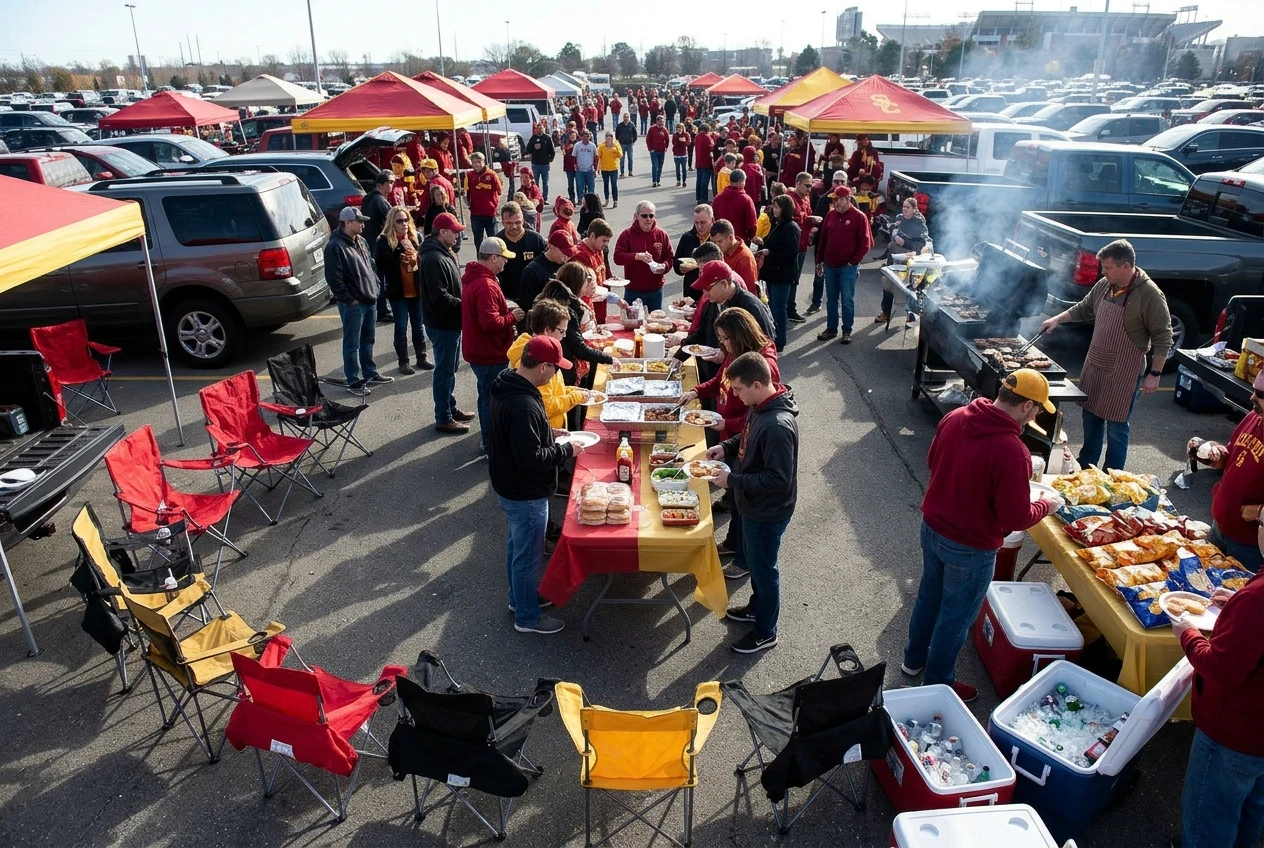
The grill station belongs at the edge of your space, upwind of where people will sit. Only the cook and a helper need to be here. Keep a small side table for a platter, tongs, a thermometer, and clean plates for finished food.
The main food station is where hot food goes once it’s cooked. Put the buns, the hot mains in warming trays, and the toppings here. Arrange everything in the order people build a plate: plates, then buns, then meat, then toppings, then sauces, then utensils and napkins at the end so nobody carries a full plate while hunting for a fork.
The snack and drink station sits well away from the main station, ideally on the other side of the group. Chips, dips, cut vegetables, and the drink cooler go here. When people can grab a drink without crossing the food line, the line moves faster, and early arrivals have something to eat while the grill is still warming up.
If you have room, set the food table with access from both sides. Two lines at one long table feed twice as quickly as one.
Keep hot food hot and cold food cold without a kitchen
Food safety guidance from the USDA says cold food should stay at 40°F or below and hot food at 140°F or above. Perishable food should not sit out for more than two hours, or one hour when the air temperature is above 90°F. A parking lot in September can easily hit that second number, so plan around it.
Cold food
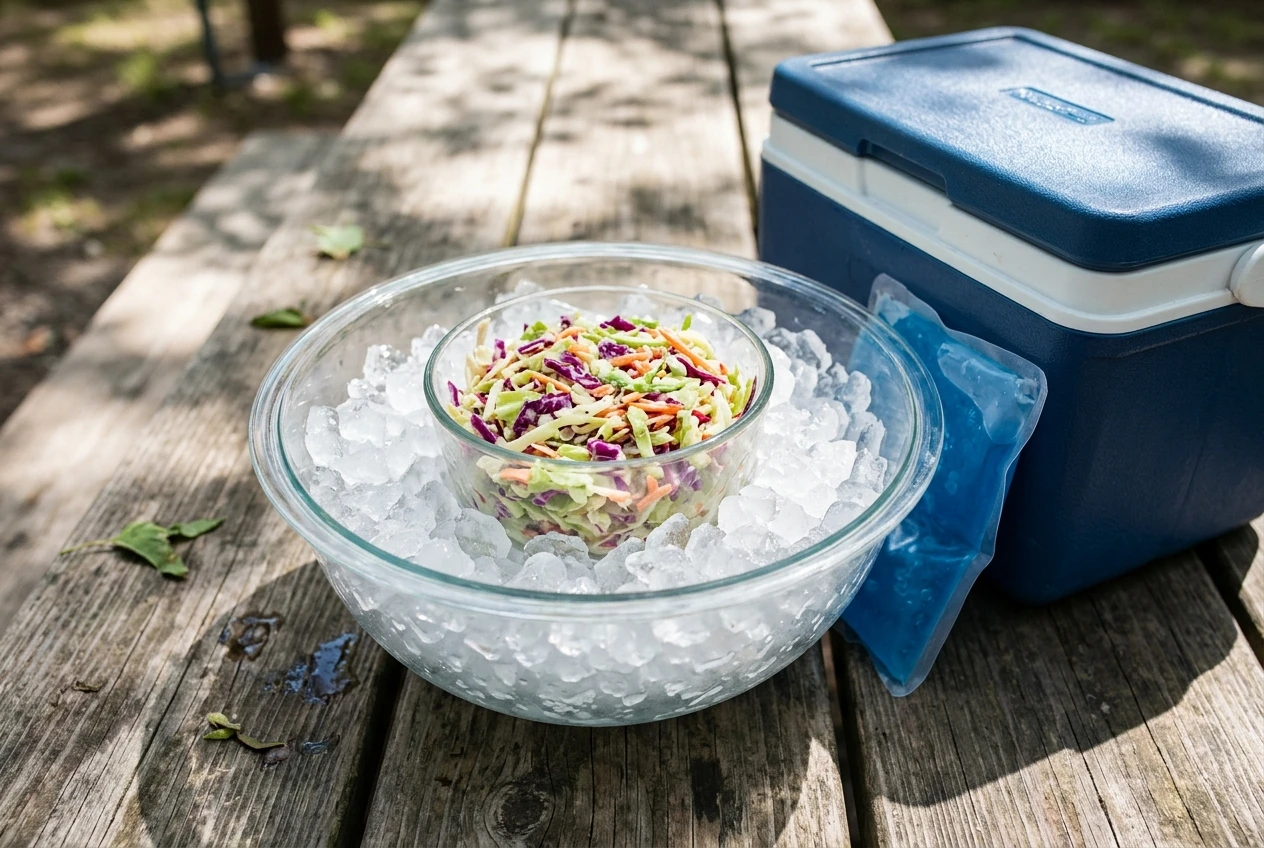
Keep potato salad, coleslaw, dips with dairy, deli meat, and raw meat in coolers until the moment they are needed. Use two coolers if you can: one for drinks that gets opened constantly, and one for food that stays shut. A closed cooler holds its temperature much longer than one opened every few minutes.
Pack raw meat at the bottom, sealed, and away from anything that will be eaten uncooked. Put ice or frozen gel packs on top of and around the food. Bring out cold side dishes in smaller bowls, and set those bowls inside a larger bowl of ice. Refill from the cooler rather than leaving one large bowl out all afternoon.
Hot food
Cooked food needs somewhere to wait without drying out or cooling off. Options include:
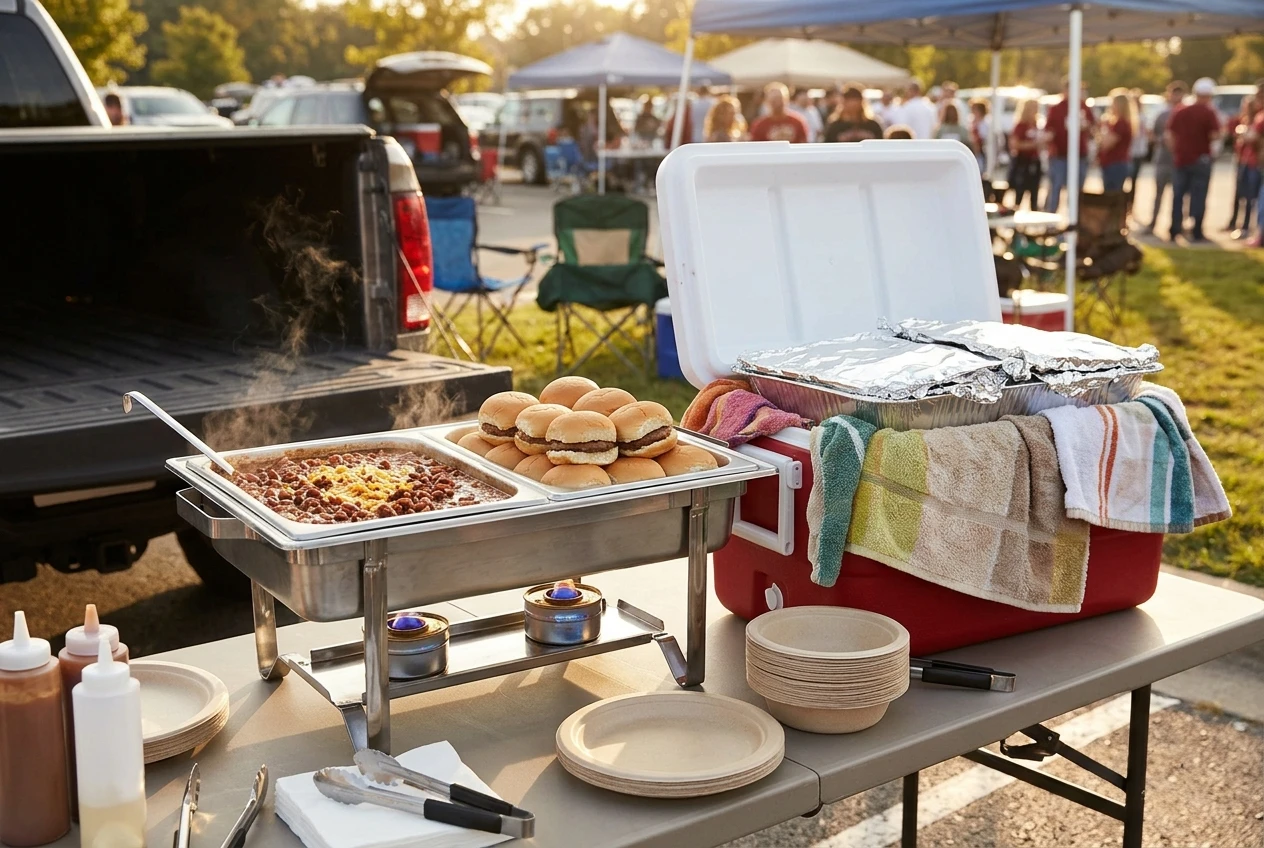
- A chafing dish with fuel cans, which works well for beans, chili, and sliders.
- An insulated food carrier or a clean, empty cooler. Wrap foil pans in towels, pack them in snugly, and close the lid. Cooked food can stay hot this way for a good while.
- A slow cooker plugged into a portable power station or an outlet, if you have one available.
- The cool side of the grill, for food you’ll serve within a short time.
Use a probe thermometer for meat. Burgers should reach 160°F inside and chicken 165°F. Guessing by color leads to either dry food or undercooked food, and a thermometer costs very little compared with either problem.
Pick a menu that survives a parking lot
Food that works at home often fails at a tailgate. The ideal item cooks quickly or reheats easily, can be eaten with one hand, and does not fall apart after twenty minutes in a warming tray.
Foods that hold up well:
- Pulled pork, pulled chicken, or chili made ahead and reheated in a slow cooker
- Bratwurst, sausages, and hot dogs, which stay good on the grill’s cool side
- Sliders on sturdy rolls
- Chicken wings or drumsticks, baked or smoked at home and finished on the grill
- Pasta salad, bean salad, or vinegar-based slaw, which handle warm air better than mayo-heavy salads
- Foil-wrapped items like corn on the cob or baked potatoes
Foods that tend to fail: anything that needs to be fried to order, delicate toppings that wilt, and dishes that require a knife and fork. Skip them unless you have a dedicated cook.
Choose one hot main, one backup, and a few sides. A crowd of 20 does not need seven entrees. Fewer dishes mean fewer containers, fewer utensils, and less to keep track of at the grill.
For quantities, plan on more than you expect for the main protein, since people eat more when they’re standing around outdoors for hours. Count on a bit extra of the simple items, like buns and chips, because they go first.
Make it self-serve so you can actually watch the game
Hosts who serve every plate by hand spend the whole pregame behind the table. Setting up for self-service gives that time back.
A few moves make it work:
- Label everything. Small cards with the name of each dish and a note like “contains nuts” or “vegetarian” save you from answering the same questions twenty times.
- Set out serving utensils for every dish. One spoon or pair of tongs per container prevents cross-contamination and stops people from digging in with their hands.
- Pre-portion where it helps. Pre-wrapped sliders, foil-wrapped potatoes, and cups of dip or toppings are quick to grab and reduce mess.
- Put the trash and recycling bins in an obvious spot at the edge of the food area, so guests do the first round of cleanup.
- Name a helper for the grill. A friend who takes over for ten minutes lets you eat and see the opening play.
Once the food is out, resist the urge to hover. Check on it every 20 minutes or so, refill what’s low, and swap out anything that has been sitting in the heat too long.
Handle the guest who skips the meat: easy options for every plate
At a group of 8 to 30, someone will almost certainly be vegetarian, avoiding pork, or dealing with an allergy. A little planning means they have a real meal rather than a bag of chips.
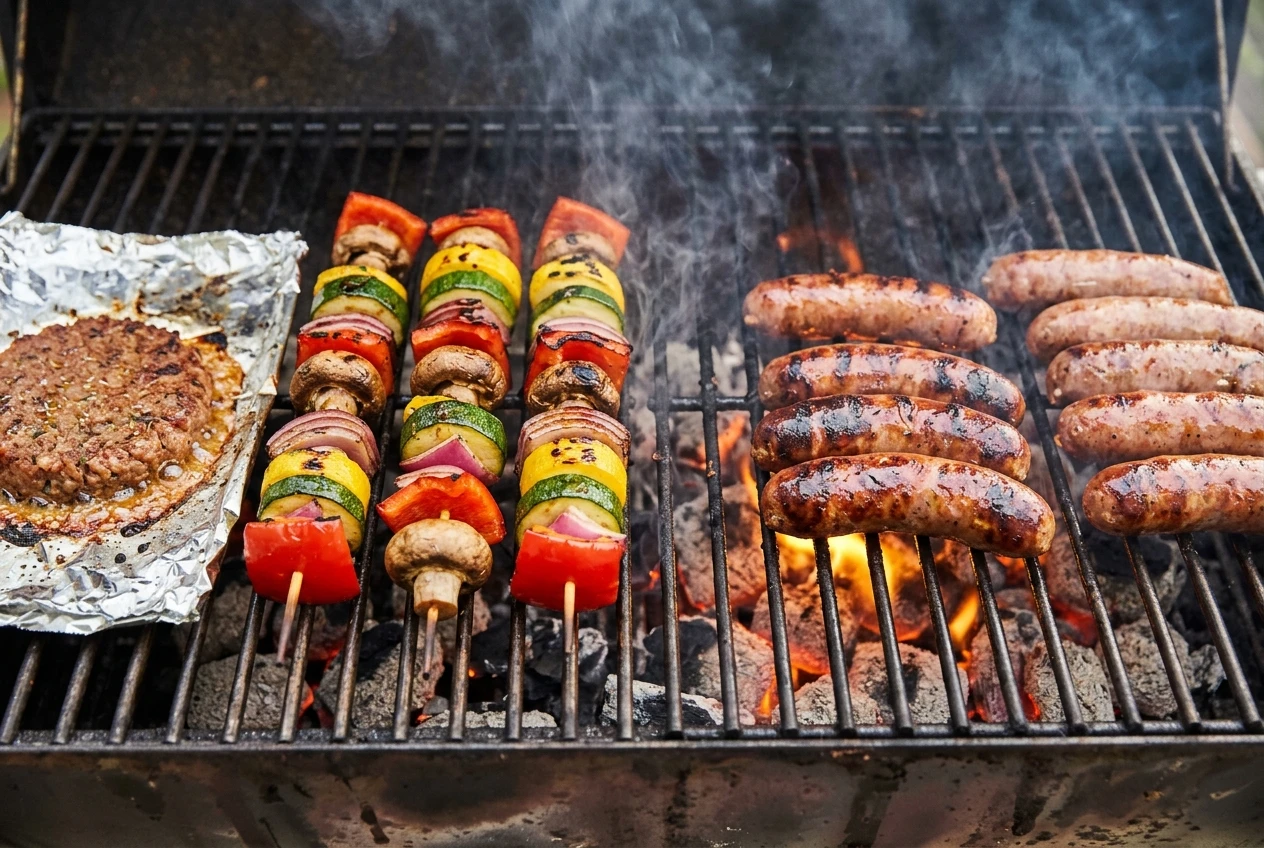
Good options that fit a tailgate:
- Veggie burgers or plant-based patties cooked on a separate piece of foil, so they do not touch meat juices.
- Grilled vegetable skewers with peppers, onions, zucchini, and mushrooms, which look good and cook fast.
- Loaded baked potatoes or sweet potatoes with toppings on the side.
- Bean chili made without meat, kept in its own slow cooker with its own ladle.
- Corn on the cob, grilled and wrapped in foil.
- A sturdy salad or grain bowl that can sit out for a while.
Check labels on buns, sauces, and seasonings when guests mention allergies, and keep allergen-friendly dishes physically separate from the rest. Ask guests about restrictions when you send the invitation. A quick text a few days ahead is much easier than learning about a shellfish allergy at the table.
The gear that earns its spot in the car
Space in a vehicle is limited, so every item has to justify its place. Think about which pieces do real work during the cooking, holding, and serving.
Worth bringing:
- Two coolers, one for food and one for drinks
- A probe or instant-read thermometer
- Chafing dishes, insulated carriers, or a slow cooker for holding hot food
- Long-handled tongs, a spatula, and a basting brush
- A folding table or two, beyond what you think you need
- Foil pans with lids, which double as cooking, serving, and storage containers
- Heavy-duty trash bags, paper towels, and wet wipes
- A small first aid kit and a fire extinguisher or a bucket of water near the grill
- Extra propane or charcoal, since running out mid-cook is hard to fix
Easy to leave home: a full set of real dishes, specialty gadgets you use once a season, and a third cooler unless your crowd is near 30.
Check your tailgate lot’s rules before you go. Some restrict open flames, grill sizes, or tent placement, and it is better to find out from the stadium’s website than at the gate.
Cleanup and leftovers: a plan before you pack up
Cleanup goes quicker when you set it up in the first hour. Keep a bin of clean utensils separate from a tub for dirty ones. Fill a bag with trash as the afternoon goes, and swap it out when it’s full.
When the game ends, start with the food. Anything perishable that has been out for more than two hours (one hour in hot weather) should go in the trash. It is tempting to save it, but the risk is not worth a few leftover sliders. Food that stayed in a cooler or sealed warming container is a better candidate for keeping.
Move leftovers into shallow containers with lids, label them, and put them straight into a cooler with fresh ice. Back home, refrigerate or freeze them promptly. Giving guests a container to take home also means less for you to carry.
Let the grill cool before packing it, and never leave coals or ashes unattended. Dispose of them as the lot or the stadium requires, usually in a metal container. Then sweep your space and take everything with you, trash included.
Ready to build your setup?
The setup works best when the equipment matches your crowd size and your menu. If you are still deciding what to bring, check out the tailgate gear picks on this site for coolers, warmers, and serving gear that fit your setup, and use the host’s checklist to fill the gaps before your next game day.
